← 输入框|en.planet.wikimedia.org|刷新
Nabunje Leticia

My journey with the Wikimedia movement has continued to be a learning experience. In 2026, I got the opportunity to serve as a Project Support and Coordination Intern at the Wikimedia Community User Group Uganda (WCUGU). This opportunity has helped me learn new skills, gain practical experience, and understand more about how Wikimedia programs and activities are organised.

Learning new tools and technical skills

During my internship, I have learned how to use different tools that support Wikimedia work. These include XTools and the Simple Tool, which have helped me explore tools used in Wikimedia activities.

I have also learned graphic design, which has introduced me to creating visual materials for communication and community activities. Another important skill I have gained is creating pages on Meta-Wiki. This has helped me understand how Wikimedia activities, programmes, and experiences can be documented and shared with the wider community.

I have also improved my skills in Microsoft Excel. I am learning how to organise information and work with data more effectively. In addition, I have learned how to upload and organise receipts in their designated locations, helping me understand the importance of proper documentation and record-keeping.

Participating in programe coordination

Project support has helped me understand the importance of assisting with project activities, following up on assigned tasks, supporting implementation, and working with team members to ensure that planned activities are completed successfully.

One of the important experiences during my internship was getting involved in organising the Wikimedia Community User Group Uganda Annual General Meeting (AGM) 2026. This gave me practical experience in supporting a community event, welcoming participants, coordinating registration and reception, and helping activities run smoothly.

Through this experience, I gained a better understanding of the planning, teamwork, communication, and coordination required to organise community activities.

Growing beyond editing

This internship has taught me that contributing to the Wikimedia movement goes beyond writing and improving Wikipedia articles. It also involves organising programmes, supporting community members, documenting activities, managing information, and helping create an environment where people can contribute to free knowledge.

I am continuing to develop my management and organisational skills as I learn from the people I work with and the responsibilities I take on.

Looking a head

My internship journey continues to be an opportunity to learn, improve, and put new skills into practice. I am grateful for the opportunity to grow, gain practical experience, and contribute to the work of the Wikimedia Community User Group Uganda. I look forward to applying the skills I have gained and continuing to learn as I support the Wikimedia movement in Uganda.

Three user groups. Two languages. One city.

When Wikicamp Kurdistan 2026 came together in Erbil this August, it was the first time Wikimedia Kuwait, Wikimedia Iraq, and Kurdish Wikimedians had organized anything at this scale together, I was part of the coordination team, and it was my first time coordinating an event of this kind.

I had spent the past two years organizing workshops, meetups, and contests for Wikimedia Iraq. A camp built by three user groups, happening for the first time in Erbil, was a different scale for me. We set out to offer participants the opportunity to learn about Wikimedia projects, contribute to free knowledge, and develop their editing skills, and to document the Kurdistan Region on Wikimedia Commons.

Arriving in Erbil

I had not been to Erbil in a long time, and I never imagined that when I finally went back, it would be to attend a first of its kind camp in Kurdistan.

I arrived feeling responsible. Some of the organizers from the other user groups I had known only as names and messages, and this was the first time we were in the same room. It was also my first time at the Erbil Youth Hub Center, our main local partner for the camp, a space dedicated to empowering young people, fostering innovation, and supporting networking.

Erbil Youth Hub Center

Inside the workshop room

My role was a Logistics Coordinator, and I was part of the documentation team as well, so when the second day came, documenting it fell to me.

Day two was the practical half of the programme. Participants learned how to edit Wikipedia and how to contribute images to Wikimedia Commons, and worked through collaborative editing activities together. Between sessions, I helped newcomers create their first accounts.

Documenting a day like that is about more than keeping a record. Looking back at those photos now, I see people discovering something they did not know was open to them. And images travel further than we expect. A community somewhere else sees what a camp in Erbil looked like, and starts to imagine their own. That is part of how this movement grows: not only through the articles we write, but through showing one another what is possible.

You can read more about the camp itself here.

Seeing familiar places differently

On the third day, we left the workshop room behind and went out to photograph the Kurdistan Region. The morning began in Shaqlawa, among its streets and mountain views, and the rest of the day was spent around water: Jandyan Waterfall, where we stopped for coffee beside the spring, then Geli Ali Beg, and finally Bekhal, with its rushing water, its local markets, and the mountains standing behind it. We got back to the hotel late, still passing photos around.

All places now have their own categories on Wikimedia Commons, and you can see them here.

I had been to some of these places before. This time was different, because I was seeing them through the eyes of knowledge, thinking about what was missing from Commons and what someone far from here would need to see to understand this place. There is something specific about photographing somewhere when you know the images will outlast the day. These were not holiday photos. They were going to Wikimedia Commons, where anyone, anywhere, could use them to learn what this part of Iraq looks like.

Looking ahead

Being a part of this camp meant learning how three communities make decisions, and finding a way to move together. I want to build on that. I plan to keep gaining experience through more collaborations, with communities in the region and beyond it.

And I am already looking forward to the 2027 edition.

Certificate distribution
Students in Arni explored collaborative knowledge creation through the Google25 Tamil Wikipedia Internship, contributing to articles, references, and the wider Wikimedia ecosystem.

Learning Wikipedia by contributing to it

How can students move from reading Wikipedia to helping build it? The Google25 Tamil Wikipedia Internship in Arni, Tamil Nadu, India, offered a practical opportunity to explore this question through a two-day intensive learning initiative.

The internship introduced participants to collaborative knowledge creation within the Wikimedia ecosystem, with a particular focus on Tamil Wikipedia. It combined digital research, encyclopedic writing, referencing, and hands-on editing to help participants understand how a free encyclopedia is created and improved by volunteers.

The program was part of the broader Google25 initiative, which supports the growth of Tamil Wikipedia and encourages more people to participate in creating freely accessible knowledge in their language.

Turning learning into contributions

Rather than treating Wikipedia only as a source of information, the internship encouraged participants to engage with it as contributors. Participants explored how to identify suitable topics, find reliable sources, organize information, and improve articles in an encyclopedic style.

The learning process also emphasized the importance of verifiability, neutral writing, and adherence to Wikipedia’s content policies. These practices are essential to building an encyclopedia that readers can consult and whose information they can check against published sources.

The internship created a setting for participants to connect digital skills with a shared knowledge resource. It also highlighted that contributing to Wikipedia involves more than adding text: editors need to consider the quality of information, the sources supporting it, and the needs of readers.

Measuring the contributions

The internships reported contribution statistics show activity across article creation, editing, referencing, and Wikimedia Commons.

The program recorded the following contributions:

  • 1,270 articles created, expanding the range of content available on Tamil Wikipedia.
  • 1,330 articles edited, representing work on existing encyclopedia entries.
  • 6,120 total edits, reflecting recorded editing activity.
  • 54 editors involved in the tracked contributions.
  • 11.1 million bytes added to Wikimedia content.
  • 8,990 references added, supporting the documentation and verification of information.
  • 8,600 article views, indicating readership activity for the tracked content or period.
  • 10 Wikimedia Commons uploads, adding media to the wider Wikimedia ecosystem.

Together, these figures illustrate the different ways contributors can support free knowledge. New articles expand coverage, edits improve existing content, and references help readers verify information. Wikimedia Commons uploads can also provide media for use in articles and other educational resources, subject to their licensing conditions.

The statistics offer one way to understand the program’s contribution. Continued article improvement, reliable sourcing, and sustained participation will also be important in assessing its longer-term impact.

Building a community of contributors

An important goal of Wikimedia education programs is to help new contributors understand how they can participate beyond a single event. Practical editing experience can provide a starting point for further learning, while engagement with the Wikimedia community can help participants develop their skills over time.

The Arni internship demonstrates how a focused educational initiative can connect research and writing skills with participation in an open knowledge project. It also offers an approach that other Wikimedia communities may consider when introducing students to language-specific Wikipedia projects.

For such programs to have a lasting impact, follow-up mentoring, opportunities for continued editing, and review of article quality can help participants move from introductory learning towards sustained contribution.

The event which was organized by the Fundación para la Internacionalización de las Administraciones Públicas (FIAP), in collaboration with FactCheckAfrica, and Wikimedia Nigeria under the European Union Support to ECOWAS in Peace, Security and Governance (EPSG) Project, took place in Lagos State from 15–17 September 2026 at the IBIS Hotel, Ikeja with a total of 35 participants comprising Wikimedia editors, newsroom editors and fact-checkers.

The seminar combined training on information integrity, fact-checking, source verification, digital investigation, and open-source information verification with a practical Wikipedia edit-a-thon that enabled participants to apply these skills to election-related, and public-interest articles during the training.

It is important to note that in Nigeria, the weaponization of misinformation, disinformation, and malinformation has caused series of voilence and as such poses serious threat to our collective future. During critical periods like national elections, fabricated stories, and manipulated media are deliberately shared to exploit ethnic and religious fault lines, turning neighbors, colleagues, and friends against one another. The seminar focused on strengthening the people and platforms that play important roles in producing, verifying, preserving, and distributing public information. This includes Wikimedia editors who contribute to open knowledge, newsroom editors responsible for editorial decision-making, and fact-checkers who investigate and verify claims circulating in the public sphere.

As Wikimedians and journalists, we were made to understand that making a publication goes beyond the immediate gratification, and the spontaneous feeling of “make i just publish, or it’s been a while I published something today”. Because at the end, any published misinformation, disinformation or malinformation will likely cause damage, distort public peace, breed widespread panic, and create chaos that would heavily undermine Nigeria democracy and progress.

Training Output

The edit-a-thon generated immediate outputs across Wikipedia and Wikimedia Commons, with 7 new articles created, 64 articles edited, and a total of 430 edits recorded. Generally, participants added approximately 20.2k words and 444 references to Wikipedia articles, alongside 9 uploads to Wikimedia Commons, of which 3 images were used in articles during the training.

Link to the outreach dashboard https://outreachdashboard.wmflabs.org/courses/FactCheck_Africa/Wikimedia_for_Electoral_Integrity

During the edit-a-thon, as a participant I published an article Bimodal Voter Accreditation System, and added 11 references to other articles.

The event ended with Wikimedians and Fact-checkers having a good synergy in the information ecosystem and reiterating the dictum of checking the authenticity and accuracy of an information before posting.

#CheckBeforeYouPost

As part of the Reading Wikipedia in the Classroom project, three educational workshops were organized on October 6, 7, and 8, 2026, for students at Al Madina School in Casablanca, in partnership between Wikimedia Morocco User Group and Al Madina School.

The workshops were coordinated and facilitated by Loubna Ait Oumasste, Education Project Coordinator, and Hayat Ahlamine.

This initiative aimed to strengthen students’ digital literacy and develop their critical thinking skills when engaging with online information. It also introduced Wikipedia as one of the world’s leading free knowledge projects and an open educational resource that can be effectively integrated into teaching and learning.

From a Digital Encyclopedia to a Learning Tool

The workshops provided an opportunity for students to explore Wikipedia, understand its fundamental principles, and discover the importance of free knowledge and the role of volunteers in making information accessible to everyone.

The activities focused on several educational objectives, including:

  • Introducing Wikipedia and Wikimedia projects.
  • Understanding how encyclopedic content is collaboratively created and improved.
  • Distinguishing between reliable information and information that requires further verification.
  • Recognizing the importance of sources and references in evaluating information quality.
  • Encouraging students to use Wikipedia responsibly and critically in their learning and school research.

Three Workshops to Foster Critical Thinking

Over three days, students had the opportunity to explore different aspects of Wikipedia and discuss how it can support their educational journey.

Particular emphasis was placed on moving beyond the traditional use of Wikipedia as a quick source of answers and encouraging students to approach it as a learning environment that promotes questioning, comparing information, examining sources, and developing knowledge through critical thinking.

This approach aligns with the objectives of the Reading Wikipedia in the Classroom project, which seeks to promote media and information literacy and encourage the integration of open educational resources into educational institutions.

Strengthening Collaboration Between Wikimedia Morocco and Educational Institutions

This initiative represents another step towards expanding the reach of the Reading Wikipedia in the Classroom project within educational institutions by bringing Wikimedia projects closer to students and highlighting the educational potential of free knowledge.

The partnership between Wikimedia Morocco User Group and Al Madina School also demonstrates the importance of collaboration between the Wikimedia community and educational stakeholders in developing innovative learning activities.

Such initiatives contribute to preparing a generation capable of engaging with digital content critically, responsibly, and independently.

Towards a Generation Engaged in Free Knowledge

The significance of these workshops extends beyond introducing students to Wikipedia. They also aim to foster a culture of research, fact-checking, and critical thinking among young learners, encouraging them to move from simply consuming information towards understanding how knowledge is created, verified, and shared.

This experience highlights how integrating free knowledge projects into school activities can provide valuable opportunities to develop digital and information literacy skills while building sustainable connections between schools and the Wikimedia community

Tech News 2026 – Issue 44

Monday, 26 October 2026 19:05 UTC

Latest tech news from the Wikimedia technical community. Please tell other users about these changes. Not all changes will affect you. Translations are available.

Weekly highlight

  • An experiment launched on September 29 is testing article recommendations for new account holders who also identify as readers. By suggesting articles to read, similar to recommendations in the Wikipedia app for logged-in readers, the experiment aims to encourage new account holders to read and return to the website regularly, with the goal of increasing internal referrals by 1%. See the related Community Wishlist proposal.
  • Several Wikimedia services were taken offline last week because of a security vulnerability in PHP. This is because they need to be updated before they are safe to put back online. This is not a problem just for the Wikimedia movement but affects a lot of websites. You can follow updates on Wikitech. Cloud VPS and Toolforge will take longer to bring back online. This is to make sure that applications which run on Cloud VPS or Toolforge are not affected. Tool developers can see updates and more information on the Cloud-announce mailing list. [1][2]
  • Last week we shared that to measure the impact of incorporating some community-requested features on logged-out reader retention, a test for the Image Carousel feature would be pushed to logged-out readers. Due to an issue, we will be restarting the test, but it will be live on October 26, not November 20 as initially announced.

Updates for editors

  • A new bot detection system to better identify automated traffic that disguises itself as human visitors, is coming to the Wikimedia wikis. This might cause sudden changes to visitor statistics starting from 26 October, going back to 20 June 2026.
  • The Score extension which renders musical notation inside wiki pages, has been temporarily disabled on all wikis due to a security issue. Affected pages will display a notice instead of musical scores, but the underlying code remains intact. No action is needed from editors, and a fix is in progress. A separate announcement will follow when the extension is re-enabled. Read more on Phabricator.
  • Recurrent item View all 18 community-submitted tasks that were resolved last week. For example, the issue where CodeMirror syntax highlighter appears to have been enabled in error for existing editors has been fixed. [3]

Updates for technical contributors

  • All wikis will be read-only for a few minutes on Wednesday, October 28 2026 at 15:00 UTC. This is for the datacenter server switchover backup tests, which happen twice a year. During the switchover, all Wikimedia website traffic is shifted from one primary data center to the backup data center to test availability and prevent service disruption even in emergencies. [4]
  • Recurrent item Detailed code updates later this week: MediaWiki

Meetings and events

Tech news prepared by Tech News writers and posted by bot • Contribute • Translate • Get help • Give feedback • Subscribe or unsubscribe.

What Happens After the Merge

Monday, 26 October 2026 18:00 UTC

A year in the Wikimedia technical community, and why a merged patch is where a contribution starts, not where it ends.

My first patch to Wikimedia software needed a lot of work. I did not really understand code review or why the automated checks had failed, and I submitted it half expecting nobody to reply. Someone did. They explained what was wrong and what I could try next, instead of simply closing it.

That reply is one of the reasons I am still here. It is also why I believe a merged patch is where a contribution starts, not where it ends.

Starting as a reader

For most of my life, I knew Wikipedia mainly as a reader. I did not realise that software, tools, and a large open-source community sat behind it, or that I could contribute to any of them. An introduction to the Wikimedia ecosystem and the Road to Wiki programme changed that.

I began learning about MediaWiki, the software behind Wikipedia and other Wikimedia projects; Gerrit, where code changes are reviewed; and Phabricator, where tasks are tracked. I set up my development environment, submitted patches, worked through review comments, and tried again.

Over time, I contributed to MediaWiki core and extensions, including PageForms and PageTriage. The process was not glamorous. It meant reading unfamiliar code, investigating problems, making changes, and learning how to respond to feedback. But it helped me become more confident working within projects maintained by contributors around the world.

Learning to help others contribute

During Road to Wiki Cohort 2, organised by WikiClub Tech India, part of Open Knowledge Initiatives at IIIT Hyderabad, with support from the Wikimedia Foundation, I became a Developer Circle mentor.

I conducted five online mentoring sessions in Phase 2 and four more in Phase 3, helping learners contribute to Wikimedia projects and tools. Alongside these sessions, I provided individual support as they navigated unfamiliar codebases, understood code review feedback, and worked through technical challenges.

Across the programme, learners worked on real Wikimedia projects, contributing to 50+ merged patches. For me, this represented more than accepted code. It reflected people learning open source workflows, gaining confidence, and taking their first steps towards becoming independent contributors. You can explore my Wikimedia journey and mentoring work on my Meta-Wiki profile.

I was also glad to see learners I had supported explore opportunities beyond their initial contributions. One learner from my earlier open-source mentoring experience was selected for Google Summer of Code 2026. Other learners had opportunities to participate in the Indic Wikimedia Hackathon and WikiConference India 2026 in Kochi, including scholarship-supported participation.

For me, mentoring was never just about getting a patch merged. It was about helping someone understand the process well enough to continue contributing independently. Their achievements belong to them, and I am glad I could support them along the way.

Making room for people who do not start with code

Not everyone discovers Wikimedia through a patch. With friends, I started Chai with Wiki, an initiative to make Wikimedia and open knowledge more approachable for students.

Through these gatherings, we created opportunities for students to explore Wikimedia, ask questions, exchange ideas, and discover different ways to participate. I wanted people to see that contributing to the Wikimedia movement is not limited to writing code or making technical changes. There are many ways to get involved, and sometimes a conversation is all it takes to spark someone’s curiosity.

A conversation over tea is not a patch, but it can be the first step towards one. Sometimes people need a welcoming introduction before they know where to begin.

Chai with Wiki gatherings brought students together to explore Wikimedia, exchange ideas, and discover ways to contribute to open knowledge.

A hackathon that kept going

In June 2026, I participated in the Indic Wikimedia Hackathon Hyderabad 2026, organised by the Indic MediaWiki Developers User Group in collaboration with Open Knowledge Initiatives at IIIT Hyderabad and the Open Source Developers Group.

I worked on Clip2Commons, a tool that supports uploading content to Wikimedia Commons. My work included improvements to Author Override, accessibility, and the upload workflow.

The hackathon gave me an opportunity to learn alongside other contributors and work on practical problems. What mattered most was that the work did not end with the event. I continued contributing to the tool afterwards.

What happens next

At the Road to Wiki Cohort 2 gathering in Gurugram, I received the People’s Choice Award for my mentoring, following votes from the participants. It was a meaningful recognition of the time I had spent helping others learn and contribute.

The People’s Champion
People’s Choice Award

I was also selected for the Design (Program-Tech Support) volunteers team for WikiConference India 2026, an opportunity to contribute to the conference and support the Wikimedia community. I also participated in Wiki Loves Monuments 2026 in India.

Looking back, my journey has connected technical learning, open-source contributions, mentoring, and community building. Each experience has shown me a different way to support free knowledge: improving software, helping someone work through a difficult review, or creating a space where a newcomer feels comfortable asking their first question.

If you are new to Wikimedia, start small, ask questions, and give yourself time to learn. If you have been contributing for a while, consider how you can help the next person through their first challenge.

A patch may be finished when it is merged. A contribution can continue through the confidence someone gains, the knowledge they share, and the next person who discovers that they can contribute too.

I am still learning, and I hope to keep contributing while helping make that first step easier for others.

This year’s Wikimedia CEE Meeting took place at Babeș-Bolyai University in Cluj-Napoca, Romania. In this post, I have compiled the key moments from CEEM 2026 that stood out to me.

First of all, Cluj-Napoca is a very nice and equally lively city. The open-air concerts and movie screenings we happened to come across while walking around the city in the evenings gave me a sense of its vibrancy.

Learning Day

At this year’s Learning Day, I attended the “Photo Workshop: Practical Photography & Commons Workflows” session because of my interest in photography. During the session, after Gheorghe taught us technical details such as photographic styles, contrast, and light, we put what we learned into practice by taking photos in the garden.

The most important takeaway from this session is that we can experiment with light as much as we want, and these experiments can yield very high-quality daily and artistic photos. It all depends on how we use the light source.

The next session of Learning Day was Bogdan Lungu’s session named “Digital Rights in an Unruly World: Strategies and Tactics of Digital Resistance”. The session generally consisted of discussions and deliberations on digital rights and today’s political, social, and technological challenges. It focused on topics such as AI, the decline in the quality of information, and digital rights, and addressed how the challenges facing digital rights today affect open knowledge communities.

Sessions

Building a Wikimedia tool with agentic AI by Asaf Bartov

These days, when creating things with AI is more popular than ever, I have been trying for a while now to develop useful Wiki tools for myself using AI tools. For this reason, Asaf Bartov’s presentation and live demonstration helped shed light on some gray areas in my mind. During the session, while Asaf was explaining how we could create a Wiki tool using AI, he himself created a Wiki tool that suggests articles in the language version and category we selected in other languages without requiring any detailed coding knowledge.

During the session, I listened to Asaf, and inspired by what I learned, I created a tool related to Turkish TV series. Once I have developed it exactly the way I want it, I’m even thinking of publishing it 🙂

CEE Hub’s Annual plan for 2026 by CEE Hub

I participated in the communication part of the discussion groups on various topics organized by the CEE Hub. I endorsed a suggestion regarding social media that had already been mentioned in the group before I joined. I also had the opportunity to discuss some improvements we plan to make to the CEE Newsletter as its new editor-in-chief.

Moved by the Movement: Mental Health, Connection and Resilience for Wikimedians by Natalia Szafran-Kozakowska

Burnout is a reality that we Wikipedians face from time to time. I acknowledge that. Through both her presentation and the workshop, Natalia showed us ways to address this issue and, most importantly, that we are not alone in this process. She explained how the movement can support us volunteers during difficult times, and how volunteering can be a source of support for one’s mental health.

Natalia’s presentation took an interactive format. At the beginning, for 5 minutes, the room was completely silent as we reflected on the moment that brought us the most joy in the movement. Afterward, we shared these moments with one another in small groups and had brief conversations about them.

This session demonstrates, in the simplest way possible, that a volunteer isn’t always alone when experiencing burnout, that they might not be the only one in the movement experiencing this, and that there’s an environment that can support them.

Young Wikimedians: Progress, Challenges, and Cross-Community Perspectives by Nal Mencin, Nursultan Tengge, Nikos Likomitros, Y. Caner Özyayıkçı

(OlesiaLukaniuk (WMUA), CC BY-SA 4.0)

Nal, Nikos, Nursultan, and I organized a roundtable discussion on topics such as the work young people do within the movement and the challenges they face. After briefly introducing the CEE Youth Group to the participants, we outlined the topics we would be discussing and invited them to join the table that interested them:

  • Table 1: Engagement & Motivation / Youth Leadership & Support
  • Table 2: Cross-Community Collaboration & Future Vision / Diversity & Inclusion

I sat at the first table with Nikos, where I both asked the participants questions and took some notes. In response to our first question, “What kinds of challenges do young people face within their communities?” one participant said that in the past, old users had tried to micromanage young editors, but that none of them remained on the project now, and that young people are now quite active in activities. Another user pointed out that there are quite a few inspiring young editors and suggested that we could see things from the young people’s perspective in order to win them over.

Our second question was, “What can communities do to increase the number of young participants?”. A common theme emerges from the responses provided here as well: using social media to engage young people. Many ideas were suggested, such as social media activities designed to capture young people’s interest, local events at educational institutions, and providing mentorship to students as they contribute to projects. In addition, one participant cited various examples to show that WikiClubs are also quite helpful in bringing students into Wikimedia projects.

Following these discussions, we presented the results we had reached to the participants as time permitted and concluded the session.

12 points go to the CEE Youth Group: Launching Wiki Loves Eurovision by Nursultan Tengge, Nikos Likomitros, Y. Caner Özyayıkçı.

Nikos, Nursultan, and I shared with the listeners our experiences and the results from the “Wiki Loves Eurovision” contest, which we organized as part of the CEE Youth Group’s goal to host local events this year.

Between May 10 and June 10, 2026, the 31 users who participated in the contest wrote or improved more than 1,000 articles in 17 languages. This exceeded our target for participants by 1.5 times and our target for articles by 4 times, both of which we had set before launching the project!

Thank you to all users who showed interest in and contributed to the Wiki Loves Eurovision contest!

A Decade in an Endangered Language Wiki: From Wikicamp to Steering Committee by Shahen Araboghlian

Shahen, who became a Wikipedian after attending a WikiCamp in 2015, shared her story with us, covering the period from the day she attended the camp until she joined the CEE Hub Steering Committee. He first began contributing to Wikimedia projects at WikiCamp in 2015 and continued his volunteer contributions without any formal structure until 2020. He explains that between 2019 and 2022, he was involved in the process of establishing a user group. In 2022, he was invited to an international Wiki conference for the first time and attended the Wikimedia Summit in Berlin. Over time, he has contributed to many different areas within the movement, from serving on the jury for the Wikimania 2025 poster design competition to serving on the jury for the “Wiki Loves Monuments” competition.

As I listened to the presentation, I was also wondering to myself what his source of motivation was; just then, at the end of his presentation, he said to the listeners the very phrase he repeats every day: “The day is new, and so is knowledge.“

I am fully convinced that memories like these will definitely serve as a source of inspiration and motivation for new users.

Social times

The warm and friendly atmosphere of Cluj-Napoca carried over into the meeting. I had the chance to socialize during breaks, at meals, and even after the conference sessions.

Together with Akaki and Mariam from Wikimedia Georgia, we exchanged ideas on what we could do together for young people in the coming months. One of these has already come true in a very short time. Together with Akaki, we launched the Georgia-Turkey Wiki Friendship Project, which had remained in the planning stages until September 2026, and we started our joint activities.

Outcome

Group photo (Knovisuals, CC BY-SA 4.0)

The Wikimedia CEE Meeting 2026 in Cluj-Napoca was, from my perspective, a very constructive and forward-looking event, both in terms of the sessions and the interactions during social time. I am confident that the fruits of the experiences I gained here will be just as wonderful as the meeting itself. Thank you to everyone in Cluj-Napoca who hosted us, made it possible for us to present, and to all the participants! See you again next year.

My Virtual Wikimania 2026 Experience

Monday, 26 October 2026 13:00 UTC

The Wikimania 2026 Virtual experience has been highly commendable, inclusive, and extremely educational. From Africa to Asia, Europe to the greater Americas, with enormous participation that involved sessions, Panel discussions, Lightning talks, and side events, which included the Hackathon. This year, Wikimania explored better strategies to collectively ensure equitable knowledge sharing and community inclusion to build a community with growth in content generation, language improvements, and enhanced user experiences in the Wikimedia movement.

AI Sessions and its Impact on Wikimedia Projects

AI tools as an assistive technology sparked broader discussions, which raised unique concerns about their fundamental contribution and perhaps their challenges on the Wikimedia projects. The session underscored the fact that AI is not a bad technology, emphasizing that its use within the movement should be used only within specific contexts of improving grammar and related areas. Wikimedians were strongly encouraged to avoid using these assistive tools on AI to generate articles, for example, on English Wikipedia. Furthermore, Wikipedia is a place where many people across the world go to learn, not just to edit. Participants also gave recommendations to the Wikimedia leaders to consider developing and deploying AI tools that help Wikimedia projects improve, especially in sourcing references. These tools should be tested on a small scale and monitored before upscaling and adoption for integration into Wiki platforms. The panel on “The State of Wikimedia and AI: Freedom, Equity, Reliability at a Crossroads” was led by Chris Albone, Director of Machine Learning and Data, Wikimedia Foundation, alongside other panelists who included Jimmy Wales, Lane Becker, Ilario Valdelli, Netha Hussain, and Audrey Tang, and the main discussion focused on community participation, governance, sustainability, and required infrastructures and resources for the necessary progression, for instance, strengthening tools within Wikimedia platforms to flag AI-generated content and to moderate the use of AI within the Wikimedia ecosystem, especially in an AI-shaped landscape.

Wiki Women Conference, Wikimania 2026 Virtual

My Full Experience and Virtual Wikimania Participation

The sessions selected for this year were highly engaging, informative, and educational in a way that builds the community’s capacity to engage, learn from best practices, and further broaden their knowledge in ensuring user-group transformation in project management. I successfully attended sessions on topics of Climate Change, the Wiki Women conference, AI sessions, Wikisource, and the hackathon. These sessions shaped my understanding of how Wiki projects facilitate gender inclusion, disability inclusion, and climate change across jurisdictions, spanning legal policy and interventions by global and international organizations that support these initiatives with Wikimedia involvement. For instance, Climate change is currently a global conversation that can’t be ignored, I had the opportunity to join the Climate Change panel: Climate Conversations: Interdisciplinary Approaches to Knowledge Sharing. This panel was led by Tatjana Baleta from South Africa, and other panelists included Dr Femke Nijsse from the Netherlands, Evelin Heide from Uruguay, and Mohammed Amine Ben Loulou from Algeria session focused on the climate information crisis within today’s broader digital information landscape, including the challenges posed by AI-generated content and coordinated misinformation. The panel further reflected on lessons learned from their work, which, among others, include urgent government interventions through policy recommendations that initiate practical solutions to support the already existing progress to improve climate coverage in practice, especially through the use of Wikimedia platforms to tell climate justice stories and share content that shapes a resilient climate ecosystem information sharing in the open knowledge movement.

Lessons Learnt

  1. Through Wikimania 2026, I learnt that on a daily basis, 10 million URL links are added to Wikimedia platforms; 1 million books are added to Wikimedia yearly; through partnerships, 350,000 dissertations from Lighton University are added to Wikimedia; and 150,000 have been digitized.
  2. High level of growth in the creation of climate change articles.
  3. Wikimedia to build more tools to help editors improve and create quality articles.
  4. Enhancing a shift in the relationship between public renters and publishers to reduce dependencies and put the human in AI for effective control and avoiding overreliance on AI models.
  5. Enhancing Collaborations between institutions of learning on better aspects of integrating Wikimedia projects into their curricula for better dissemination.
  6. Ensuring high-end companies like OpenAI feature Wikipedia articles to make content creators share their content with wider reach.
  7. Use of the Padlet platform to improve Wikimedia projects.

Wikimania 2026 Virtual Light Moments

Wikimania Paris was a memorable event. I connected with many Wikimedians from other continents through the Event Yay platform; this is such a wonderful tool. During the sessions, I managed to make submissions seamlessly and follow live conversations to ensure I built my capacity in Wikimedia Project management. Lightning talks were a very impressive session of the meeting. Also, I enjoyed using the Padlet platform to suggest ideas to improve Wikipedia and the Wikimedia movement. Many user groups shared the work they are doing to increase community participation through campaigns, editathons, hackathons, and this motivated my editing experience, and I will continue to support the growth of the open knowledge movement in Uganda and beyond.

Emma Oruk
Project Lead: Wiki-Gap, Wiki for Minorities in Uganda.
Wikimedia Community User-Group Uganda

The Mabia team held its First Quarter Team Meeting on October 18, 2026, via Zoom, bringing members together to review recent developments, discuss micro-grant applications, and plan upcoming Wikimedia activities across the Mabia language communities.

The meeting opened with remarks from Sadik, who thanked everyone who contributed to the successful organization of the Language Diversity Conference held in Accra from October 2 to 4, 2026. He also announced the approval of Wali Wikipedia, congratulating the team on this important development for the Wali language community. He further updated members on the Mabia Individual and Community Micro Grants, noting that the Kusaal and Gurene communities were applying for the micro grants, while the Wali and Dagaare communities had received rapid grants.

Zakaria Tunsung presented updates on upcoming projects involving the Wali and Dagaare communities. These include Wiki Loves Food 2026 in Ghana, scheduled for November 1 to 30, 2026, to document food and food-related images on Wikimedia Commons. The teams will also organise a Wikidata Lexico Editathon beginning on December 3, 2026, and continuing into January 2027. Wiki Loves Ramadan is planned for February and March 2027, with activities spanning Wikimedia Commons, Wikidata, and Wikipedia.

The Grants Committee, represented by Rukaya Hamidu, reported that four individual micro-grant applications had been reviewed. One applicant withdrew, while three applications were approved and forwarded to the Finance Manager for further processing. The committee is still awaiting community grant applications from the various language communities.

During the finance update, Abdul-Rasheed Yussif reminded members to submit accurate account details to facilitate the disbursement of their micro grants. He also encouraged all teams to use event registration pages on Meta to record participation and measure the results of their activities. This prompted a discussion on the need to strengthen the teams’ capacity to create and use these pages, with Musah Fuseini suggested a training session for that.

Sadik also briefed members on Veronica Thamaini’s visit to the Dagbani Wikimedians User Group office in Tamale. The update provided an opportunity for members to hear about the visit and its place within the group’s ongoing engagement with the wider Wikimedia movement.

As the meeting drew to a close, members reaffirmed the need for timely submission of grant applications and correct banking details. The Waali and Dagaare communities will continue preparations for their upcoming projects, beginning with Wiki Loves Food 2026 in November. Teams were also encouraged to adopt Meta event registration pages consistently to improve the tracking and reporting of their activities.

Meeting registration

WS Contest back online

Sunday, 25 October 2026 02:36 UTC

Fremantle

· Wikisource · Wikimedia · Toolforge ·

The Wikisource Contest tool is back online. It doesn't seem to have minded being upgraded to PHP 8.4, and oddly it was using an old OAuth consumer despite there being a newer one right there made for it (the older one had an old callback URL, using tools.wmflabs.org, which is currently not working due to the PHP debacle).

This post is also on Mastodon.
← Previous Next →

weeklyOSM 848

Sunday, 25 October 2026 00:00 UTC
weeklyOSM 848
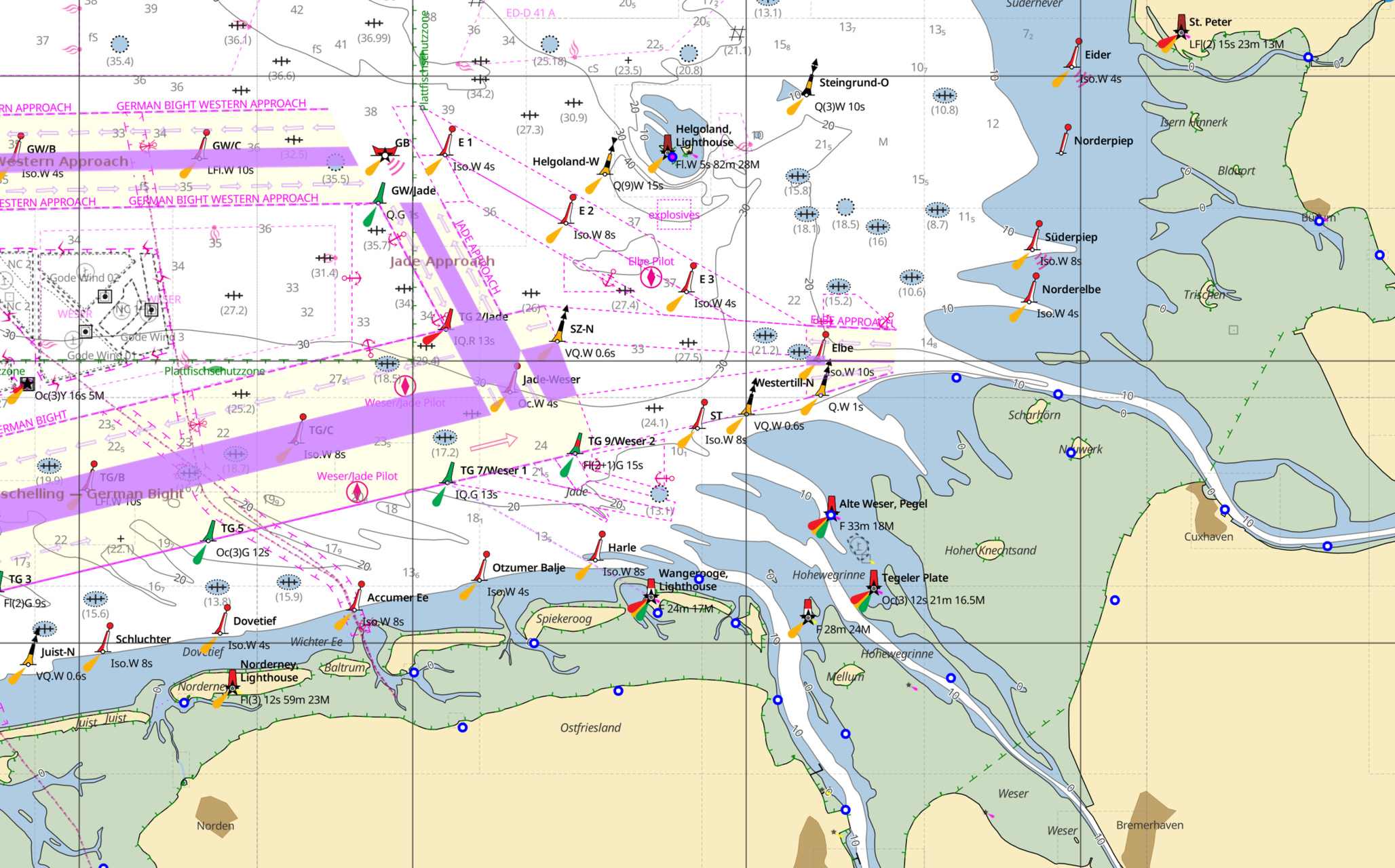
[1] FreeNauticalChart | map data © by OpenStreetMap Contributors.

15/10/2026-21/10/2026

Mapping

  • Mateusz Konieczny has proposed bot edits that would remove wall=wall from barrier=wall objects (and nowhere else) and do the same for fitness_station=yes and fitness_station=fitness_station on leisure=fitness_station, crossing=yes on highway=crossing, bollard=yes on barrier=bollard objects.

  • Requests for comments have been made for the following proposals:

  • Tykayn, aka Baptiste Lemoine, proposes phasing out amenity=hospital in favour of healthcare=hospital. Voting on this is planned to take place from 5 to 19 November.
  • HuggeK, PizzaTreeIsland and FairwayMapper want to use type=sport, along with golf=course and golf=tee_markers, to map golf courses with multiple courses and tee-dependent values.

Mapping campaigns

  • The Ballerup Municipality announced five new MapRoulette challenges covering all five Danish regions, with nearly 90,000 tasks to help improve OpenStreetMap.

Community

  • Four ministries of the Government of Québec have granted explicit authorisation to incorporate their geographical data into OpenStreetMap. The OSM Contributors wiki page contains a link to the authorisations. It should be noted that the Ministry of Natural Resources and Forests limits their authorisation to the dataset explicitly mentioned. Québec contributors subsequently started a discussion on the OSM Community forum to plan the steps for integrating these significant additions of data into OpenStreetMap: reviewing administrative boundaries, integrating address points and buildings, and harmonising street names.

  • FooBar99 explained how aerial imagery can be used while offline mapping in JOSM. To do this, he uses the Python tool MapTilesDownloader, which downloads tiles at any zoom level.

  • OpenCage interviewed Sofia Pahaoja, creator of Touch Mapper, in the latest of their OpenStreetMap interview series. Touch Mapper uses OpenStreetMap data and 3D printing to create tactile maps for visually impaired people.

OpenStreetMap Foundation

  • The OpenStreetMap Foundation announced the election of Craig Allan (26.7%), Gregory Marler (26.4%), Héctor Ochoa Ortiz (25.7%), and Maurizio Napolitano (21.2%) to its board. All four candidates reached the required threshold in the first round and there were 1,656 voters in this election, with 595 ballots cast, of which 580 were valid.

  • Craig Allan presented the 2026 Chairperson’s report at the OpenStreetMap Foundation Annual General Meeting, as chair of the OSMF Board. Several other reports and documents were also presented at the meeting, including the 2026 Treasurer’s report by Roland Olbricht, the 2026 Personnel Committee’s report and the minutes of the 2025 Annual General Meeting.

  • The OpenStreetMap Ops Team reported that several PHP-based secondary OpenStreetMap services were temporarily offline due to a critical PHP security vulnerability.

Local chapter news

  • From 2 to 4 October 2026, FOSSGIS hosted ► the FOSSGIS-OSM Community Meeting at the Linuxhotel in Essen, attended by 25 active members. Topics included association work, a Mapnik-style replica of OpenSeaMap for map printing using print.get-map.org, and an exchange of experiences regarding the Panoramax instance. The results are documented on the wiki.

Events

  • Stefan Keller is inviting you to a webinar on enterprise data integration with Apache Hop on 27 October 2026 from 11:00 to 12:00 CET. It is online and free of charge. The webinar will cover the latest version, the current status of the GIS plugins, and two case studies from Glue Software Engineering AG.

  • KonGeoS, the conference for geodesy students from the German speaking region, took place at Mainz University of Applied Sciences from 15 to 17 October 2026. At the exhibitors’ forum, FOSSGIS members provided ► information about open-source GIS, OpenStreetMap, and the association.

  • Katja Haferkorn reported ► on the Smart Country Convention in Berlin, where FOSSGIS e.V. was represented at the lat/lon GmbH stand in the Open Source Park.

Education

  • The Spatial Workflow team have assessed OpenStreetMap data completeness in Washington, DC (US), by comparing OSM’s road network with the Census Bureau’s TIGER roads, analysing building and road growth curves using full OSM history data via the ohsome API, and measuring the completeness of key attributes.

Maps

  • The web app atm.gr lists ATMs across Greece on a map and in a searchable list, using OSM amenity=atm data combined with data from the banks and refreshed weekly. Attributes missing in OSM are shown as unknown, which indicates to local mappers where data can be improved.

  • The Institute of Geography at the Autonomous University of Mexico maintains a web map of geosites, based on OpenStreetMap and Leaflet. Knowledge of geohistory is essential for promoting its appreciation and fostering its conservation. In this regard, the identification, documentation, and dissemination of geosites help bring the Earth sciences closer to different sectors of society and contribute to a greater understanding of the land and the natural processes that shaped it.

  • At efimereuonta-nosokomeia.gr there is an independent free service that shows Greece’s hospitals on a map and in a list, including telephone numbers, directions and details of their Accident and Emergency departments. The map is based on OpenStreetMap, and the list works even without an internet connection. No registration is required, and a separate page shows which hospitals are on call today. For emergencies, the home page provides direct links to the numbers 166 (EKAB) and 112.

  • MapQuest has added a Halloween-themed Surveillance layer to their Android and iOS applications based on OSM man_made=surveillance data.

  • OsmAnd has updated its terrain maps and contour lines for the United States, Canada, and Mexico, using high-resolution national elevation data from the USGS, NRCan, and INEGI. The new data has about a 10 m resolution in the mainland US and about 30 m in Alaska and most of Canada and Mexico, so smaller ridges and steeper cliffs are now visible.

OSM in action

  • Jan Kryšpín has launched North Up Daily, a daily map puzzle in which you have to reorient 16 rotated map tiles so that roads and rivers line up correctly, and then guess the location. The game is free to play and requires no account. If you want more, you can practise as much as you like in practice mode or compete on the leaderboard. The map data is sourced from OpenStreetMap.

Software

  • Geocracia, a Brazilian news portal, released its AI prompt (beta version) but there is no OpenStreetMap attribution, even after contacting the developer about this problem.

  • In episode 313 of the Freakshow podcast, Tim Pritlove introduced ► Kugelblitz, a 3D globe browser ► for macOS that uses various data sources, including Sentinel-2 Cloudless, NASA Blue Marble, Earth at Night, Natural Earth, Mapterhorn, and OpenStreetMap.

  • Ratafuel is a free, open-source Android app that helps you find the cheapest fuel nearby in France. It combines open data on fuel prices with OpenStreetMap data on petrol stations. You can filter stations by fuel type, search for them in a selected town, and open a route in a sat-nav app. Ratafuel contains no adverts or trackers; access to your location is optional.

  • Stadia Maps explained that a recent update pays closer attention to land cover processing and presentation in the Alidade Bright, Outdoors, and Stamen Terrain map styles.

  • Gigazine explained how to use Vespucci, a free, full-featured mobile app for editing OpenStreetMap data.

Programming

  • [1] Adam Lucke has developed FreeNauticalChart.net, an open-sourced and open-data project that aims to provide free nautical charts.

  • Sarah Hoffmann reported that OpenStreetMap has not yet decided whether or not to participate in GSoC 2027. Students are advised not to get involved in projects before the participation announcement in March 2027, when OpenStreetMap’s participation will be confirmed.

Releases

  • Simon Legner has released Maplair 4.0.0, an open-source JavaScript library for interactive maps, forked from Leaflet. It integrates features that previously required plugins or workarounds in Leaflet applications, including map rotation, fullscreen mode, search, heatmaps, a minimap, and legends.

  • Rphyrin released version 26.10.16 of whathappened.here, a social check-in and review application built on OpenStreetMap. This update added shareable permalinks for user and location pages.

  • Tobias Zwick has released StreetComplete version 64.0, which is the first stable iOS version of this editor. It may take some time for the app to become available in the App Store.

Did you know that …

OSM in the media

  • Jakub Waller’s Papamap was featured on German Televison channel NDR.

  • Chase DiBenedetto, of Mashable, explained how commuters can avoid Flock cameras using MapQuest, a navigation app launched in 1996. Its recently introduced ‘Surveillance Layer’ allows users to locate nearby Flock cameras and other surveillance systems. According to MapQuest’s terms, the data comes from OpenStreetMap contributors.

Other “geo” things

  • The Regional Court of Frankfurt am Main has ruled , in a judgment that is not yet final , that Google is prohibited from publishing 3D images of a residential property. German case law on the matter is inconsistent, as the Regional Court of Itzehoe reached a different decision in a similar case in 2020.

  • Before dominating the oceans with its fleets, Portugal legally built ► its right to navigate them, conquer them, and exclude its rivals. From the pontifical legitimacy of the Portuguese monarchy to the bulls of the 15th century and the Treaty of Tordesillas, the political and legal foundations of the mare clausum transformed the ocean into a space of sovereignty and overseas expansion.

  • In his newsletter, Mapas Milhaud, Miguel García Álvarez presented ► twelve browser-based geography games. These included WorldGuessr (guessing locations using Street View), TimeGuessr (estimating the location and year a photo was taken), Worldle (recognising countries from their silhouettes) and Travle (naming countries as a chain of connections). His personal favourite is GeoGrid, in which you fill in a 3×3 grid.

Upcoming Events

Country Where Venue What When
🇮🇳 Ernakulam Edapally, Kochi Kochi Mapping Party 2026 2026-10-24 - 2026-10-25
🇮🇹 Pordenone Consorzio Universitario Pordenone Linux Day a Pordenone 2026-10-24
🇮🇹 Bologna Liceo Copernico di Bologna Linux Day 2026 a Bologna 2026-10-24
🇮🇹 Parma Officine On/Off Parma Linux Day 2026 Parma 2026-10-24
🇫🇷 Inclu K’fé Cartopartie à Orx 2026-10-24
🇮🇹 Biblioteca comunale Alda Merini Linux Day Casorate Sempione 2026 2026-10-24
🇩🇪 Berlin Wikimedia e.V. Tempelhofer Ufer 23-24,10963 Berlin OSM Hackweekend Berlin-Brandenburg 10/2026 2026-10-24 - 2026-10-25
🇸🇪 Uppsala Datorföreningen Update Mapping meetup in Uppsala 2026-10-25
🇮🇳 Bengaluru Olive Street Food Cafe, 7th Cross Road, BTM Layout OSM Bangalore Mapping Party 2026-10-25
🇮🇳 Noida Noida OSM Delhi NCR Mapping Party No.33 (Noida) 2026-10-25
a11y-Score: ein OSM-Barrierefreiheitswerkzeug 2026-10-26
CartONG : Mapathons en ligne 2026-2027 2026-10-26
🇮🇹 Milano Formazione Wikimedia Italia - OpenStreetMap: tasking manager 2026-10-26
🇩🇪 Heidelberg DEZERNAT#16 Rhein-Neckar OSM Treffen 2026-10-26
🇩🇪 Stadtgebiet Bremen Online und im Hackerspace Bremen Bremer Mappertreffen 2026-10-26
🇫🇷 Saint-Étienne Zoomacom Rencontre Saint-Étienne et sud Loire 2026-10-26
🇲🇽 Ciudad de México Antiguo Colegio de San Ildefonso State of the Map Latam 2026 2026-10-27 - 2026-10-29
Pravidelný Missing Maps CZ-SK online Mapathon 2026-10-27
🇪🇸 Madrid Online Mappy Hour OSM España 2026-10-27
🇺🇸 San Jose Online South Bay Map Night 2026-10-27
🇦🇹 Wien Schlupfwinkel (Kleine Neugasse 10, 1040 Wien) 80. Wiener OSM-Stammtisch 2026-10-27
🇬🇧 Derby The Brunswick, Railway Terrace, Derby East Midlands pub meet-up 2026-10-27
🇫🇷 La Fabrique des possibles Réunion du groupe local de Nancy 2026-10-28
🇩🇪 Düsseldorf Online bei https://meet.jit.si/OSM-DUS-2026 Düsseldorfer OpenStreetMap-Treffen (online) 2026-10-28
🇩🇪 Würzburg FabLab Würzburg Würzburger OSM-Treffen 2026-10-28
🇨🇭 Rapperswil-Jona OST RJ Gebäude 6, Rapperswil 20. Mapathon & Mapping Party Rapperswil 2026 2026-10-30
🇮🇹 Pesaro Biblioteca-Archivio “Vittorio Bobbato” Linux Day Pesaro 2026-10-31
🇮🇳 नई दिल्ली Jitsi Meet (online) OSM India - Monthly Online Mapathon 2026-11-01
🇩🇪 Hannover Kuriosum Stammtisch 2026-11-02
🇨🇭 Bern Provisorium46 Berner OpenStreetMap-Znacht 2026-11-03
Missing Maps London Mapathon Beginner Friendly (with Training) (Online) [eng] 2026-11-03
🇩🇪 Stuttgart Forum 3 Café Stuttgarter OpenStreetMap-Treffen 2026-11-04
🇫🇷 Bar Le Schmilblik Rencontre mensuelle des contributeurs Paris sud 2026-11-05
🇫🇷 Angers L’Arrière Train, 3 rue de Frémur, Angers Angers Rencontre mensuelle OpenStreetMap 2026-11-06
🇦🇹 Salzburg HTL Itzling Maker Days Salzburg 2026-11-07
🇮🇹 Angera Mapathon @ Angera 2026-11-07
🇩🇰 København Cafe Bevar’s OSMmapperCPH 2026-11-08
CartONG : Mapathons en ligne 2026-2027 2026-11-09
🇹🇼 臺北市 MozSpace Taipei OpenStreetMap x Wikidata Taipei #94 2026-11-09

This weeklyOSM was produced by MarcoR, MatthiasMatthias, Raquel Dezidério Souto, Strubbl, Andrew Davidson, barefootstache, derFred.
We welcome link suggestions for the next issue via this form and look forward to your contributions.

Afroalpine wanderings

Saturday, 24 October 2026 06:14 UTC

This might be a rare divergence in genre from my regular posts in being about travel. Travel of this kind is a rather rare event for me and I had almost decided not to write it here but then felt it might be something I might want to be able to be able locate more easily for myself in the future. The Wikimedia Foundation held Wikimania 2025 in Nairobi and I was fortunate to have been selected to attend with support. It was held in a wealthy ghetto of Nairobi, isolated in a high-security hotel complex, and I suspect many of the attendees hardly saw what the rest of Kenya really is. Along with another participant, Manoj Karingamadathil, and our wonderful driver Peter, we spent about 5 days visiting Nyeri, Mt Kenya, the Aberdare National Park, and looping anticlockwise around the Aberdares through the rift valley, back via Lake Naivasha to Nairobi. One of my aims was to see the Afroalpine vegetation zone with giant lobelias and Dendrosenecio, something that more people associate with the Kilimanjaro region. 

Prior to the trip, I set myself about to learn as much Swahili as possible, and it was not really needed but certainly useful. I had decided not to go anywhere near the over-hyped and overpopulated wildlife parks. I was not even interested in the migration of wildebeest in the Masai Mara. I saw later on social media, the horrors of tourists and safari vehicles blocking animals and forcing them to leap off cliffs so that photographers could take pictures of animals splashing into the water or be taken by crocodiles just as they were shown in some NatGeo/Discovery wildlife videos.

I also spent a good deal of time examining older travels and descriptions of the Aberdare and Mount Kenya region. In the process I went about sprucing the Wikipedia entries on Samuel Teleki and Halford Mackinder. Both their expeditions have rather shocking events, Teleki and his entourage had burn Kikuyu villages and shot many. Mackinder (later a professor) and his team had casually murdered some of their porters (the final bill to the contractor merely has "shot on orders" written against them!). And then their expeditions took back numerous plants and animals which were named after them. And there are places that still bear their name in Kenya.

Lioness gherao-ed by vehicles
Just before leaving Nairobi for Nyeri, I decided to join a bunch to a somewhat overpriced safari to the Nairobi National Park. The traffic load that the park deals with is rather shocking and the behaviour of the vehicle drivers confirmed my worst about what happens elsewhere. The word "gherao" describes how the vehicles dealt with the poor lioness. We did however see some very beautiful ostriches, a black-bellied bustard, a hunting serval, and a secretary bird among many other things and the park is truly beautiful in spite of its unusual juxtaposition of wildlife with the city skyline. I noticed groups of Fiscal Shrikes following herds of zebra and swooping down to take disturbed insects after them. I was not able to find any information on this in the literature. It is perhaps fortunate that the wildlife tourist pressure can be focussed on some unfortunate sanctuaries while letting some areas be far more wild. Like in India, it seems that the plains bear a greater pressure than the hilly regions. The lack of roads is probably the biggest saviour of the wilderness. The old colonial travelogues with their slow caravans contrast so much with our rapid ability to move around. 

We made our way to Nyeri that afternoon and reached in the evening, stopping along the route many times. I later learned that the name of the town Nyeri does not exist in pre-1902 maps of east Africa and that it was coined by the ornithologically-infamous Captain Meinertzhagen who had served in the King's Africa Rifles. (PS: he is infamous otherwise also, butchered the Kikuyu and likely killed his first wife) A 1903 photograph of him in uniform was exhibited in the Nairobi National Museum. A visit to the museum earlier in the week was also quite enlightening. I had an inkling based on the amount of space spent for the bird exhibits that it had its origins in natural history and only later did I find that it was actually created by the colonial members of the East Africa Natural History Society (I had to create a Wikipedia entry for the organization!). In general the colonial impact on east Africa seemed to be so much worse than in India - with far more violence inflicted on the local people and land. The story of white wildlife preserves is also quite stark. The pricing of the larger and more popular wildlife reserves targets wealthy western tourists but I heard some happy bits from a guide that the Kenyan Wildlife Service gives out special permits for Kenyan students to visit the sanctuaries at free or reasonable prices. We saw a large bunch of (mostly) happy school children and their teachers taken for a walk from the Naro Moru gate until the Met Station and back. One hopes that more local naturalists, educators and conservationists prevail.

Some months earlier I had plowed through a machine translation of a German biography of Bernhard Grzimek (and obviously, tried to improve the English Wikipedia entry) - and the overall story was rather sad. When I was a kid in the late 1970s, my father used to bring home issues of the beautifully illustrated Das Tier, a German predecessor of the BBC Wildlife Magazine that the Max Mueller Bhavan in Bangalore (then located in an old bungalow on Museum Road decorated with a large Araucaria and Balan Nambiar installations) used to receive. It was one of the popular creations of Grzimek (sadly there seem to be no digital archives of this amazing work) and when I went to university, I found his Animal Encyclopedia a fascinating work. By some oversight I only noticed much later that the venue of Wikimania was right across the road from a school named after Michael Grzimek. One presumes that a large donation was made by BG to them. The Grzimek biography ends with the highly questionable and unusually large amount of wealth that he had accumulated through his life and the family squabbles and tragedies that had followed after his death. 

Nyeri was a welcome escape from Nairobi and a visit to the Baden Powell memorial, although not a fan of the man, revealed a somewhat unexpected surprise. I am sure it was well known but I had missed it in my research and the grave of Jim Corbett cropped up rather unexpectedly. I knew that Corbett moved to Africa after Indian Independence and had known of his exploits in the nearby Aberdare range which resulted in his last book "Treetops" and his rather famous quip on the freshly minted Queen Elizabeth. Interestingly the Bible quote used on the memorial is exactly the same one used on his mother's grave in Nainital (photo - remembering a very rainy monsoon day in Nainital) - presumably chosen by his sister Maggie.  

Nearby was another large grave - that of Gray Leakey - a cousin of Louis Leakey. The horrific story behind it was known to the local guide but was new to me - and so, naturally, I later created a Wikipedia entry at Gray Leakey. Overall, it seems that the Mau-mau uprising needs a complete retelling in a post-colonial analysis and voice. There is a rather under-appreciated museum at Nyeri that looks at local history and the independence movement. We visited the General Karibu caves area and the surrounding countryside, filled with streams fed by the glaciers on Mount Kenya - the real reason for Nyeri's agricultural wealth and much of the colonial settlement.

Entrance to the dining room in Treetops
The Aberdare National Park is an incredibly large reserve and is undoubtedly the place for any naturalist to visit. Somehow the idea of a mountain range in Africa came as a surprise to me. Whereas roads in Indian hill regions tend to become highly twisted their the obligatory hair-pin bends, the roads in the Aberdares are surrounding regions are laid remarkably straight and as one moves from here to the rift valley, the changes in altitude are so gradual. We entered the Aberdares from the Treetops gate - named after an establishment that was patronised by Corbett. The moment one enters at dawn, one is entertained with the amazing sounds of the African forest - the almost electronic-surround-soun antiphonal duet call of a boubou combined with numerous Apalis, Tauraco, Cisticola and other unidentified species. The tops of the Aberdares have shola-like grasslands, termed there as moorlands. Along the way one encounters thick Hagenia (a rather delicate Rosaceae with almost herbaceous looking leaflets) and Podocarpus forests, followed by tall bamboo forest. We saw an elephant on a faraway hill, a cape buffalo, and a large pig which turned out to be "Meinertzhagen's" Giant Forest Hog Hylochoerus meinertzhageni! Jackson's spurfowls were the tamest and most conspicuous roadside birds (remarkable how understudied they are in the ornithological literature). We only managed to reach as far as Chania falls before we reached the 2 pm turn-around point and the route was just stunning! I dream of a day when I will be able to make another trip with someone who knows the region, its fauna and flora, better.
Helichrysum on Aberdare's moorlands

Heath, Hagenia, Sambucus, Podocarpus etc. beside the Chania stream  

Moss draping the Podocarpus, 
parts of the Aberdare are watered by condensation
 
Helichrysum in the foreground, a Kniphofia just visible

The most coveted visit was to the Afroalpine zone on Mount Kenya. The road from Naro Moru to the Met Station which lies on the slopes of the extinct volcano of Mount Kenya was another of those straight mountain roads - getting from 1500 m to 3050 m on a straight line (with a leopard welcoming us!).  


The leopard

We walked from the Naro Moru Met Station up above the tree line to see the incredible flora. Giant Lobelia and Dendrosenecio appear after a region of heath. The ground is boggy and covered in strong tussocks of grass. We were not equipped with waterproof shoes and we started a bit too late as well. The weather on the mountain is constantly changing, sun, wind, cloud, mist and all of a sudden a shower of hailstones. Lobelia gregoriana which forms beautiful rosettes holds a little bit of fluid at the centre which is apparently a frost protection adaptation. The polysaccharides produced by the plant cause ice to form at the top of the water pond which insulates the central growing tip from freeze injury. I wondered if a similar adaptation exists in the Hedyotis verticillaris of the Mukurthi region. I showed a picture of the landscape to botanist Navendu Page and he exclaimed that it was "a different planet" ... it is. We did not go into Teleki valley or see the nival zone and sadly, the glaciers on Mount Kenya appear to be doomed. The glaciers looked from the plains like flecks of white which led to the Kikuyu name of Kere-Nyaga which according to one etymology theory is related to the white feathers on an ostrich. The Kamba people called it Kima ya Kegnia, others called it Ndur (Kimaja) Kegnia and Kirenia. Somehow that gave rise to the word "Kenya."  One bleak prediction on the glaciers is that they will all be gone by 2030. With it, nobody quite knows what will happen to the streams that they fed, the lands that they water, the people involved in farming, the vegetation, and wildlife.

Heath (Erica arborea) just above the tree line

The rosette of Lobelia gregoriana with the pond

Lobelia gregoriana flowering, the flower edges are torn 
by Moorland chats (Pinarochroa sordida), pollinators

Dendrosenecio keniensis in flower

Dendrosenecio keniodendron in the background


Looking up the slope of the so-called "vertical bog"

A final goodbye to Mount Kenya

It is easy to see the effect the mountain had on the people and the ritual significance that many tribes gave to it. 

From the Rift Valley, the Aberdares on the horizon

 
Rift valley vegetation of euphorbs

We returned to Nairobi with a stopover at a typical tourist trap - Thompsons Falls. And another stopover at Lake Naivasha. We had enchanting views of Mount Longonot from the escarpment in the evening. Obviously we had just scraped the surface.

Kenya is a beautiful country for the most part but like any place there are troubles hidden underneath. There is clearly a vast wealth gap and the city of Nairobi is a cruel one with the usual signs of urban poverty. The lack of government spending on social infrastructure like public transport is glaring. The villages and smaller towns were much more cheerful looking. The Kenyan public education system has clearly delivered in the past. There were a few unfortunate sights like police extorting petty money from vehicles passing by and there were big protests that the government had suppressed with violent force. A proliferation of churches which apparently make great money indicated the general poverty of governance. Hopefully, good people will prevail and make it a better place for all, in spite of the long and deep divides of tribes, linguistics, and circumstance. 

I greatly missed my good old Lumix FZ100 which was the ideal travel camera which dealt with both macro and distant objects. Sadly, a minor electronics fault has made it unusable. Bridge cameras have unfortunately become unavailable or too expensive. I only had my mobile phone and my new Olympus OM-D EM10 but setup mostly for macro photography for which I did not have enough time. But more images can be found on iNaturalist and Wikimedia Commons - all of course on free licenses - a gallery can be found here. 

Thanks to numerous people and circumstances that made this trip possible.

Wikimedia Foundation for supporting my attendance at Wikimania Nairobi. Harish Thyagarajan for assistance with Kenya logistics and most importantly, reassurance. Sugandhi for putting me in touch with Harish! Peter, our enlightened driver and local assistance - we will remember the Swahili wisdom - “Kupotea njia ndio kujua njia” [= to be lost is the way to find the way]. Martina Tichácková on iNaturalist for the alpine plant identifications. The wonderful welcoming people we met along the way, KWS guide Alex, the KWS staff at various gates. The friendly host at a tiny little restaurant in Naro Moru who found Indian snacks too spicy. Manoj for the great company!

Some wikipedia side effects
Articles created: Darwin Glacier, EANHS
Articles improved: Victor van Someren, Samuel Teleki, Halford Mackinder, Ludwig von Höhnel

Wikipedia:Administrators' newsletter/2026/11

Friday, 23 October 2026 03:06 UTC

News and updates for administrators from the past month (October 2026).

Administrator changes

added ·
readded
removed

Guideline and policy news

Technical news

Arbitration

Miscellaneous


Archives
2017: 01, 02, 03, 04, 05, 06, 07, 08, 09, 10, 11, 12
2018: 01, 02, 03, 04, 05, 06, 07, 08, 09, 10, 11, 12
2019: 01, 02, 03, 04, 05, 06, 07, 08, 09, 10, 11, 12
2020: 01, 02, 03, 04, 05, 06, 07, 08, 09, 10, 11, 12
2021: 01, 02, 03, 04, 05, 06, 07, 08, 09, 10, 11, 12
2022: 01, 02, 03, 04, 05, 06, 07, 08, 09, 10, 11, 12
2023: 01, 02, 03, 04, 05, 06, 07, 08, 09, 10, 11, 12
2024: 01, 02, 03, 04, 05, 06, 07, 08, 09, 10, 11, 12
2025: 01, 02, 03, 04, 05, 06, 07, 08, 09, 10, 11, 12
2026: 01, 02, 03, 04, 05, 06, 07, 08, 09, 10, 11
<<  Previous Archive    —    Current Archive    —    Next Archive  >>

Maintenance

Thursday, 22 October 2026 22:09 UTC

Oct 22, 15:56 UTC
Identified - The issue has been identified and a fix is being implemented.

Oct 22, 15:56 UTC
Investigating - Many community-owned tools are temporarily offline. This is a precaution due to the recent software security incident in the PHP programming language. Learn more at https://diff.wikimedia.org/2026/10/21/impact-of-php-vulnerabilities-on-wikimedia-cloud-services/

“The biggest group project you’ve ever worked on”

Thursday, 22 October 2026 16:00 UTC

Alvin Khiêm Bùi is Assistant Professor of History of Asian Peoples in Diaspora at Brooklyn College, City University of New York. Here he reflects on the interaction between editing and teaching with Wikipedia in the history and Asian American Studies classrooms at public institutions of higher education.

Wikipedia and Me 

My journey to teaching with Wikipedia (the “Wikipedia Assignment”) was a circuitous one, but perhaps one that was destined to happen. I was most active in editing Wikipedia in my teenage years. Until interacting with other Wikipedians in the flesh at WikiConference North America 2025, I did not realize that meant I was an “early adopter”. 

As my time shifted to other hobbies and my academics, Wikipedia remained in my life as a tool for ideating topics and learning new things, usually by “going down ‘Wiki rabbit holes’”. As I (re)learned Vietnamese and learned French and Chinese, I read the same Wikipedia article/topic in these other languages to compare how robust they were. This practice led to at least the seed for one of my dissertation chapters. In particular, I found an incident within the migratory aftermath of the Vietnam War (the “Indochina [‘boat people’] refugee crisis”) that (at the time) only had Wikipedia pages in Chinese, rather than in Vietnamese, English or French. This initial contact led to Chinese-language secondary and primary sources, and eventually an entire chapter of my writing.

As I formulated syllabi for my first undergraduate classes as a professor at CUNY Brooklyn College in the Spring semester of 2025, I reflected on my own undergraduate experience in the history classroom and the path I took to returning to academia to complete a PhD in Southeast and East Asian history. I knew that given my own pathway to “finding my research interest” could be applied to the classroom through the Wikipedia Assignment. At the very least, it would be a novel way to approach assessment in the new world of Generative Artificial Intelligence (GAI).

Alvin Khiêm Bùi
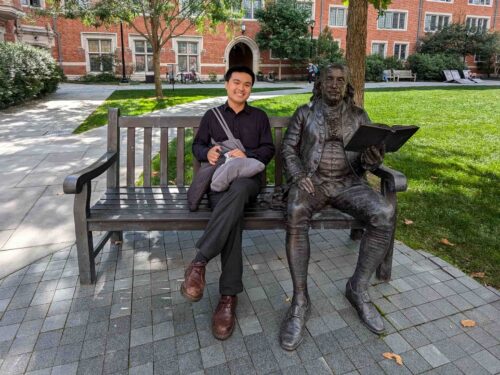
The author gaining wisdom from Benjamin Franklin before giving a talk. Photo by Quan Tue Tran, all rights reserved.

Wikipedia and Sources

As an undergraduate student, I did not understand why so many of my history instructors had us read primary sources. Unless the primary source was in a “primary source reader” with an introductory essay, or read in-class with the guidance of the instructor, most students were pretty lost. Primary sources, even from countries/places whose histories I was interested in, never really moved me (a motivated double major in History!) in my undergraduate classes.

Conversely, Wikipedia’s preference for citing secondary sources aligned well with my thinking on historical pedagogy. Before I experienced for myself the ability for a well-selected primary source to bring course content to life, I found “the world of secondary sources” (historiography or literature review) and the existing content on a Wikipedia page (a tertiary source) more manageable. And it was not until I read more secondary sources in Vietnamese Studies that I figured out what scholarly research methods best aligned with my ambivert personality and where I saw the “gap” in the literature/historiography that I hoped to help fill. Reading compiled primary sources was like looking at court cases (also a primary source) where the verdict was already out!

The Wikipedia editing process simulates a highly scaffoldable portion of the literature review (or historiography) of the research process with public audiences in mind. Students find and understand secondary sources as they figure out what their “contribution” to related Wikipedia pages is. Often, this is to find “the gap” in the current literature/historiography. Student editors edit the Wikipedia page so that it accurately reflects and/or includes content from the secondary sources they read, and then cite those sources. While many students are worried about how to correctly write a citation in MLA/APA/Chicago format (a process which the Wikipedia editor can now more or less automate with DOI or ISBN numbers), the Wikipedia Assignment helps reorient students toward “doing the reading carefully” as the bulk of the work.

Prior to working in a Wikipedia sandbox, where students can draft their contributions before publishing them, I ask students to turn in annotations of the articles/chapters they read along with a corresponding worksheet that I use earlier in the semester to show them how to digest a peer-reviewed historical journal article (based on Professor Zachary Schrag’s The Anatomy of a 30-Page Paper). Students suggest changes to their Wikipedia pages on this worksheet, to which I reply with feedback. Thus I can give students a structured introduction to the public-oriented research process that captivated me as a teen stumbling onto this large, not-for-grades “group project”.

The most compelling reasons for editing Wikipedia have remained much the same as Professor Rachel Tamar Van’s laid out in her 2019 reflection, now with various GAI and Large Language Models (LLMs) services augmenting and replacing “Google”. It’s more important than ever to understand the role of content on Wikipedia (visible or otherwise) in GAI/LLMs’ responses. By asking students to contribute to Wikipedia’s “base of historical knowledge”, it brings up the question of what constitutes theft and plagiarism (versus “verifiablity”) when it comes to the training of LLMs. The Wikipedia Assignment shows that there is still great value in teaching and refining the human ability to “verify” (or the verifiability that facts/claims come from reliable sources), a key policy of Wikipedia at which GAI still struggles. Wikipedia’s general prohibition of “use of large language models such as AI chatbots to create or rewrite articles, generate images or comments, or be used as sources” provides this conversational touchpoint. 

Asian American History

This process of reading, verifying and editing is especially important in the fields of history in which I teach: our general education course focused on “‘global’ history from 1500-present” and migrations/diasporas from Asia, including, but not limited to the relatively “young” field of Asian American History, with the concept of “Asian American” coined by historian Yuji Ichioka in the late 1960s. With a second undergraduate major in Asian American Studies, I knew from my West Coast classrooms that it was a privilege to have such a robust amount of courses available to me. Most East Coast students do not have such a privilege (indeed, the Association of Asian American Studies has a section called “East of California”). 

This is where Wikipedia’s Knowledge Equity initiative and CUNY’s mission of “provid[ing] a public first-rate education to all students, regardless of means or background” align. Brooklyn College, in particular, showcases this mission, as we have attracted a student body that has ranked among the top (if not the top) in ethnic and economic diversity indices across the nation.

We do not need to go outside the borough of Brooklyn to see Asian American history. Beyond migration histories to neighborhoods like Sunset Park (see the work of Tarry Hum) and Bensonhurst, Asian Americans have been involved in events in NYC interracial relations such as the 1990 Flatbush boycotts (see the works of Claire Jean Kim; note how a shorter piece by Kim is referenced in the article, but not her 2001 book; meanwhile, most of the references are to primary sources—newspapers articles from 1990-1991) and the building of multiracial coalitions in the face of different forms of “state-sanctioned removal” (see Vivian Truong’s article in the Journal of Asian American Studies). My next goal is to have students cite exhibits created by youth researchers of the Localized History Project, housed at CUNY’s Asian American/Asian Research Institute, in the hopes of bringing the Project to a broader Wikipedia audience.

As I remind my students: they and their family’s taxpayer and tuition money makes CUNY, the “nation’s largest urban public university”, possible, and CUNY in turn makes access to a wide array of paywalled peer-reviewed academic secondary sources possible. We have an imperative to build upon the current (free!) draft of “the sum of all human knowledge” with our access to these sources behind the paywalls. For future historians, this is but one corner of the internet where they can find the hopes of millions of netizens living in the early 21st century participating in what I like to call “the biggest group project you’ve ever worked on”.


Interested in incorporating a Wikipedia Assignment into your course? Visit teach.wikiedu.org to learn more about the free resources, digital tools, and staff support that Wiki Education offers to postsecondary instructors in the United States and Canada.

Wikis read-only: Datacenter switchover

Thursday, 22 October 2026 06:42 UTC

THIS IS A SCHEDULED EVENT Oct 28, 15:00 - 15:10 UTC

Oct 22, 06:42 UTC
Scheduled - The SRE team will run a planned data center switchover, moving all wikis from our data center in Virginia to the data center in Teaxs. This is an important periodic test of our tools and procedures, to ensure the wikis will continue to be available even in the event of major technical issues.

The switchover process requires a brief read-only period for all Foundation-hosted wikis, which will start at 15:00 UTC on Wednesday October 28th and will last for a few minutes while we execute the migration as efficiently as possible. All our public and private wikis will be continuously available for reading as usual, but no one will be able to save edits during the process.

Emergency Maintenance

Thursday, 22 October 2026 00:30 UTC

Oct 22, 00:30 UTC
Completed - The scheduled maintenance has been completed.

Oct 21, 00:30 UTC
In progress - Scheduled maintenance is currently in progress. We will provide updates as necessary.

Oct 21, 00:18 UTC
Scheduled - Due to emergency maintenance, some features of Wikimedia sites may be temporarily unavailable.

Ask an AI assistant a factual question and the answer may well draw on Wikipedia, yet you don’t always see it. This is the case with many sources on the internet. Publishers, libraries and broadcasters face similar questions. As the EU debates how AI, transparency, author’s rights and sustainability fit together, a basic question deserves its share of attention: When AI systems, search engines and apps reuse content, can people see where it came from? Is it clear which part of the answer is a citation and which is edited or added? Can we guarantee that the source is not misrepresented?
This post explains the Wikimedia Attribution Framework, a practical, voluntary answer from the Wikimedia Foundation, and what Wikimedia would like AI companies to do with it.

Why attribution & presentation matter

This includes the financial question, but it by far not limited to it:

  • Accuracy and trust. A summary can lose a caveat or misquote a figure. A visible source and a working link let readers check, which is the kind of transparency we seem to want from AI.
  • Traffic and brand. People who can see and easily open the place where information comes from can go and read more. A recognisable source also builds trust.
  • Human editors. Wikipedia is written and kept up to date by volunteers, most of whom started as readers. Without visibility, the path from reader to contributor is lost. The communities of people people who keep a public-interest resource alive might disappear.
  • Fundraising: The Wikimedia Movement’s main source of income are donation banners on the projects. If people don’t go to Wikipedia they wont’ see them. Publishers have a similar issue, but with advertising.

What the framework is

Version 1, published in beta in May 2026, is a set of voluntary guidelines for anyone reusing Wikimedia content: search engines, AI assistants, apps, social media and media outlets. It sits alongside existing legal duties, since the open licences already require credit, and it makes meeting them simple and consistent. It has three levels:

  1. Essential attribution: the source, title and a link back, plus a clear indication when content has been summarised or changed rather than quoted.
  2. Trust and relevance: how many people contributed, how many references the article has and when it was last updated.
  3. Ecosystem growth: invitations to read further, edit or donate, where possible.

What we would like from AI companies

For AI assistants, the recommended set includes the source, a link, the reference count, the contributor count and the last update. A beta Attribution API delivers these signals in one request, and high-volume commercial reusers can expect the same information through Wikimedia Enterprise.

The approach starts from evidence. A November 2025 survey experiment with 1,186 participants found that attribution signals measurably shaped trust in chatbot answers, while the effect was harder to detect in search results. This is early research, but it suggests attribution matters most where it is currently weakest: in chatbot settings. So the baseline request for these is:

  • Name the source and link to the specific page used, next to the answer rather than buried in a footnote.
  • Say when text has been summarised or changed, so a paraphrase is not mistaken for a quotation.
  • Show why the source is trustworthy and invite people in: contributors, references, freshness, and a way to read on or take part.

None of this is technically hard. Perhaps it can also offer EU policymakers a concrete reference for what is reasonable and practical.

The framework is in beta and the Foundation is asking for feedback. Read the framework, the announcement on Diff, the Attribution API documentation and the research.

Late on 15 October, an email was sent to all UK-based Wikimedia Foundation staff from Safeguard UK (SG), the employer of record, entitled “Update on trade union recognition discussions”. We are disappointed by this communication, which presents an incomplete and misleading account of the discussions and the reasons our recognition process has moved to the Central Arbitration Committee (CAC). We want to clarify what has happened, why we have sought a formal determination, and what comes next. We have included a timeline of communications between Safeguard Global and UTAW-CWU at the end of this message.

Status of the recognition process

As SG accurately notes, the CAC has scheduled a hearing for 29 October, with a determination on the scope of the bargaining unit expected by 20 November. Importantly, this hearing is not about whether UK workers should have a union, but rather concerns who will be included in the bargaining unit. This hearing refers to the “establishing a bargaining unit” stage of the documentation on the gov.uk site.

From the outset, UTAW-CWU and the WWU-UK Branch have sought recognition covering all UK-based Wikimedia Foundation staff. Safeguard, however, is seeking to exclude certain categories of our colleagues, including management-level staff, legal counsel, and HR associates, on the grounds of possible conflicts of interest in collective bargaining. We disagree with this proposed exclusion and argue that the proposed bargaining unit is compatible with effective management, avoids fragmenting the workforce into small bargaining units, and accounts both for the shared employment characteristics of staff in the unit, and location, in the UK. The point-by-point reasoning has been described in our prior public report. The deadline for submission of written arguments and evidence for this hearing was 19 October.

As people who will benefit from and be subject to the same bargained workplace conditions and benefits, we believe managers have an equal right to participate in their creation. If you are one of the few UK-based WMF staff not already a member of UTAW, especially if you are one of the aforementioned categories that SG wishes to exclude from scope, please know that we are working to ensure your employment rights.

Misrepresentation

Safeguard’s email states that “CWU have indicated that they would prefer to discontinue the voluntary discussions process” and proceed before the CAC. This is an incomplete and misleading account.

In early July, SG chose to enter negotiations rather than voluntarily recognise our proposed bargaining unit. We accepted that decision in good faith and participated fully in the process. Since then, SG has requested only two negotiation meetings, both focused on narrowing the scope of the bargaining unit. Throughout these conversations, our organising committee and UTAW-CWU representatives have provided detailed explanations, relevant legal precedents, and information about the Wikimedia Foundation’s organisational structure to explain why we believe the proposed exclusions are unnecessary. Despite these efforts, SG maintains its position of excluding categories of staff from scope. To suggest that our union simply preferred to discontinue discussions misrepresents a decision made collectively by workers involved and our union representatives.

We have not withdrawn from constructive engagement. We have pursued the established statutory process because voluntary discussions have not resolved the central disagreement. The CAC provides an independent mechanism to determine the bargaining unit when the parties cannot agree. Seeking that determination is a legitimate and established part of the UK union recognition process.

The WWU UK Branch recognition process was launched in July—before the WWU-US Branch process which has now concluded with an overwhelmingly positive ballot—and yet the UK process remains in the same place. We remain committed to constructive engagement, but constructive engagement must lead to progress. Moving to the CAC is a necessary step towards resolving the outstanding disagreement and advancing recognition without further stalling and delay.

Join us

We are working hard to ensure the maximum scope of union recognition for our colleagues. Our priority remains ensuring that as many UK-based colleagues as possible can benefit from collective representation.

WMF HR leadership has confirmed that all UK-based staff, including managers, may join discussions about their potential union representation. We want every colleague to understand the process, have access to accurate information, and have an opportunity to participate.

###

Timeline of UK voluntary recognition negotiations so far

  • 24 June: UTAW-CWU submitted the request for voluntary recognition of the WWU-UK Branch with a proposed bargaining unit of “all staff in the UK employed by SafeGuard as Employer of Record for and on behalf of Wikimedia Foundation, Inc.”.
  • 7 July: SG responded, requesting to negotiate rather than to accept voluntary recognition, which was accepted on the same day. This started a 20 working day (minimum) clock.
  • 31 July: The first negotiation meeting was held, attended by SG, UTAW-CWU, several UK Wikimedia Foundation staff, and mediated by a representative of Acas. No substantive points for negotiation were raised by SG during the meeting. It was noted that the request for statutory recognition (via the CAC) would be submitted after the 20 days, and that this process can, does, and should run parallel to voluntary recognition negotiations.
  • 6 August: The statutory recognition paperwork was submitted for a potential ruling by CAC if needed.
  • 18 August: A senior SG manager counter-proposed the bargaining unit scope: that we exclude all managers, legal counsel, and HR associates on the basis that these would create a conflict of interest in collective bargaining.
  • Same day: We responded that this is factually incorrect, as this is not how the Wikimedia Foundation’s employment conditions are determined. We also consulted with WMF members, and they were against excluding the roles.
  • 20 August: CAC confirms that the proposed bargaining unit has passed the membership density check, by cross-referencing employee and membership records provided by SG and UTAW respectively.
  • 3 September: The second Acas-mediated negotiation was held, again including members from the UK WMF staff. SG reiterated its position to remove managers (etc.) from the bargaining unit scope. At length, UTAW representatives described the UK legal context, UK WMF staff described the practical context for the organisation, explaining why this would not represent a conflict of interest.
  • 11 September: SG did not meet timelines and next steps agreed in a meeting for an updated bargaining unit counter-claim, so we emailed to ask if they’re withdrawing from voluntary negotiations. A senior SG manager replied to say they have not withdrawn, and argued that we are refusing to discuss their point about a conflict of interest.
  • Same day: We replied that we had a lengthy discussion in the meeting about this issue, and gave further evidence as to why there would be no conflict of interest. We noted that we’re willing to come to a third negotiation meeting if they wish to have one, but that it should be about something different, as re-litigating the same conversation would not be good-faith negotiation but rather merely an attempt to delay.
  • 16 September: The senior SG manager sends a longer email repeating the same, but asserting they want to continue in good faith.
  • 17 September: We emailed SG to confirm that we would like CAC to rule on the bargaining unit scope.
  • 15 October: SG sends email to all UK WMF staff claiming that “CWU have indicated that they would prefer to discontinue the voluntary discussions process”.
  • 19 October: Submission of evidence and written arguments to CAC.